
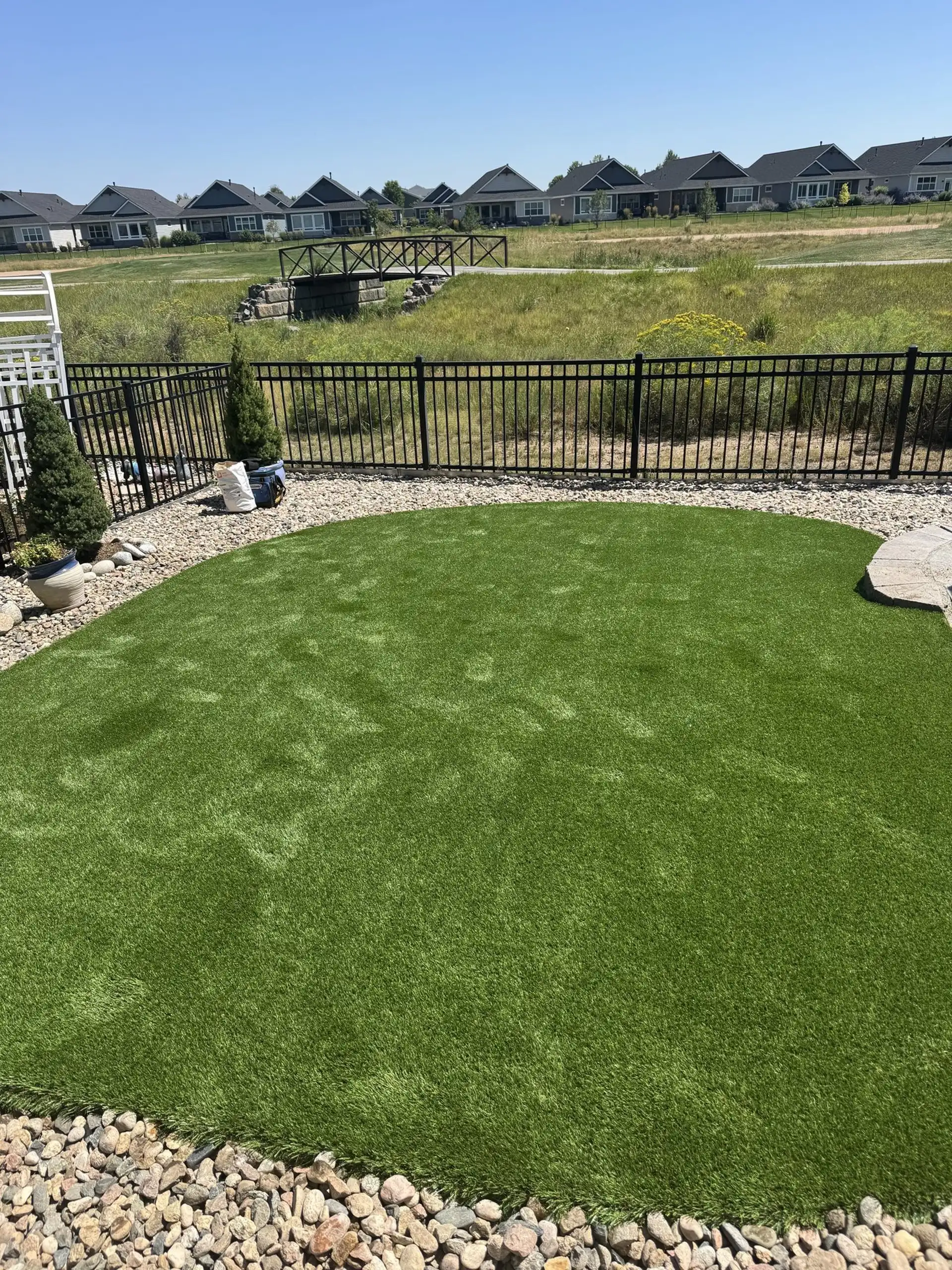
The Grand Strand
Turf replacement on the Grand Strand, with the flood-permit question asked first.
Worn-through or flood-soaked turf comes out, and new turf goes in on a base built for your ground. Free visit, ground checked, written quote.
- The flood-permit question asked before a flooded base is dug out
- County drop-off limits for old turf on both sides of the state line
- New turf planned behind North Carolina’s 30-foot shoreline buffer
- Layout approved before installation
- American-made turf
- Free estimates, no pressure
The short answer
What changes when you replace turf on the Grand Strand?
Flood and shoreline permits can apply. In Horry County's flood zones, digging out or filling a base counts as development, so ask first. On North Carolina waterfront, plan for new turf 30 feet back from the water.
Before you install
What to know before you start.
The rules in short. We measure and check the ground at a free visit, then draw a layout that fits.
-
After a flood
In unincorporated Horry County, ask the floodplain administrator about your lot before the old base comes out; in a flood zone, digging needs a permit. Inside a city or town, ask it instead.
See the rule on after a flood
Rebuilding a flooded base? Ask about a flood permit before anyone digs.
Before the old base comes out of a yard in unincorporated Horry County, ask the county’s floodplain administrator whether the lot sits in a flood zone. Horry County’s flood chapter reaches past FEMA’s special flood hazard areas to a supplemental flood zone, an official map of roughly where water actually spread after Hurricane Florence. Digging out a base counts. The chapter lists excavation, grading and filling as development, and no development may start without a development permit.
Don’t raise a low yard with extra base until you have that answer. When fill goes into either zone, the chapter requires compensatory storage: new floodable space dug out to make up for the storage the fill takes, with engineering analyses. Bring the county’s answer to the free visit so the base work matches it.
The county chapter covers the county’s own jurisdiction. Inside a city or town, ask that city or town instead; our Conway page points to the city’s flood maps. On the North Carolina side, the Carolina Shores and Shallotte pages name the town office to start with.
-
What the water left
Photograph soft spots, opened seams and lifted edges once the water drops. If your turf sat under river or storm water, plan for the old infill to leave with it.
See the rule on what the water left
Look at what the flood left before deciding what stays.
Once the water drops and the surface dries, walk the turf and take photos of soft or sunken spots, seams that have opened, edges that have lifted, and silt or debris caught in the fibers. Note whether the water came from heavy rain, the river or the tide, and how many days it stood. Those photos tell us where to look first when we check the ground on the free visit.
River floodwater can carry more than mud. After Hurricane Florence, nearly 1,000 homes and businesses near the Waccamaw River in Conway flooded, and on 26 September 2018 raw sewage flowed from the Conway Wastewater Treatment Plant into a tributary that feeds the river, according to the National Hurricane Center’s Florence report. If your turf sat under river or storm water, plan for the old infill to leave with the turf instead of being brushed back into the new lawn.
-
North Carolina waterfront
Plan new turf 30 feet back from North Carolina shoreline water; in 2021 the state's coastal commission agreed turf needs a CAMA permit and isn't allowed in that buffer. Ask the Wilmington coastal office first.
See the rule on north carolina waterfront
Near North Carolina water, plan for new turf to stop 30 feet back.
If old turf in Shallotte, Carolina Shores or elsewhere in Brunswick County sits within 30 feet of the water, draw the new layout behind that line unless the state tells you otherwise. North Carolina’s coastal shoreline rule puts new development 30 feet back from the normal water level along estuarine and public trust shorelines, with listed exceptions such as landscaping. Replacement isn’t a way around it. Rule 07J .0210 says replacing structures damaged by natural elements or normal deterioration is development that needs CAMA permits, allowed only if the replacement is consistent with current Coastal Resources Commission rules.
Neither rule names turf, but the state has said how it reads them. In an August 2021 memo, Division of Coastal Management staff asked the Commission to confirm that turf isn’t covered by the landscaping exception. On 15 September 2021 the Commission voted 10-1 to agree with staff’s interpretation that turf requires a CAMA permit, isn’t landscaping and isn’t allowed within the buffer, its meeting minutes record. Staff’s November 2025 rules review lists the buffer rule for a possible amendment that would say so in the rule itself.
Before you plan the layout, ask DCM’s Wilmington District office, which serves Brunswick County, what permit the new turf needs. Our state-line guide covers how North Carolina counts turf toward built-upon area on the rest of the lot.
-
Where the old turf goes
Ask that the quote says where the old turf and infill go. Horry County's convenience centers take up to 4 cubic yards a day, and neither county names turf, so ask before hauling it.
See the rule on where the old turf goes
Settle where the old turf goes. County drop-off sites have limits.
Ask that the quote says where the old turf, backing and infill will go, and know the limits before you haul any yourself. In Horry County, only residents of unincorporated areas can use the SWA’s 25 recycling convenience centers, and each resident can drop off up to 4 cubic yards of material a day. The SWA landfill at 1886 Highway 90 in Conway takes mixed construction debris and asks for materials to be separated by type, and its C&D Processing Facility takes carpet and carpet padding for recycling.
In Brunswick County, the four convenience centers take residential waste from Brunswick County only, and trucks larger than a standard pickup have to use the county landfill in Bolivia, which also takes only Brunswick County waste. Turf and infill aren’t named on the SWA’s pages or on Brunswick County’s accepted-items list as of September 2026, so ask the SWA or Brunswick County Solid Waste how to class them before you load a truck.
-
Your estimate
Tell us which county you’re in and send any flood photos or coastal-office answer you have. After the free visit and your approved layout, the job covers prep, base, new turf, infill, finish and cleanup.
See the rule on your estimate
Bring what shows the county, the flood and the shoreline.
Tell us whether the yard is in Horry or Brunswick County and whether it sits inside a city or town. Send your flood photos and any answer you already have from a flood or coastal office. On North Carolina waterfront, bring any CAMA permit or DCM letter you have for the old turf.
On the free visit, we measure and check the ground under the old turf. Work starts only after you approve a custom layout. The job covers site prep, a base built for your soil, premium American-made turf laid, seamed and edged, infill, finishing and cleanup, and a walkthrough of the care it needs. See our turf replacement service for the full scope, and the Grand Strand page for the other turf we install here.
What we install
Turf replacement for your space.
FAQ
Questions about turf replacement in The Grand Strand.
What does Horry County ask for with a flood permit?
Apply to the county floodplain administrator before work starts. For a lot in or appearing to be in the FEMA-mapped floodplain, Sec. 9-33 requires a plot plan showing the base flood elevation contour, or a statement that the whole lot is in the floodplain, prepared or supervised and certified by a registered land surveyor or professional engineer. The permit may also call for scaled plans showing elevations and where fill and drainage facilities will go. Ask which of these a base replacement needs.
Will storm debris pickup take old turf?
Ask before you pile it by the road. The Horry County SWA’s Disaster Debris Management Plan (January 2022 update) says media releases should tell residents to set debris along the right-of-way in separate piles, such as vegetative and construction debris, and notes that construction debris typically holds a lot of carpet. It never mentions turf, and it lists a debris lead for each city, so ask your city or the SWA which pile old turf belongs in. In Brunswick County, the county may activate its disaster debris contracts after a storm, but deciding can take several days to weeks; if it does, its disaster debris page will post disposal instructions.
What if the turf is more than 30 feet from the water?
It may still need a CAMA permit. The 2021 memo says turf anywhere in a coastal Area of Environmental Concern requires one, and that inside the 75-foot area it may count toward the lot’s impervious surface limit after a case-by-case review, depending on how it’s installed. Ask the Wilmington District office whether your lot is in one before work starts.
Free estimate
See the plan before you decide.
Tell us about your project and we’ll call to arrange a free visit.
Or call 720-630-0108
Your free estimate includes
- A visit to measure your space
- A custom layout, drawn for your space
- Turf options, side by side
- A written price, with no pressure to sign
Five short steps. We’ll call to arrange your visit.