
Northeast Florida
Commercial turf in northeast Florida, planned around your site's stormwater permit.
Before the grass comes out, find out how your stormwater permit and landscape code treat turf. We measure at a free visit and give you a written price.
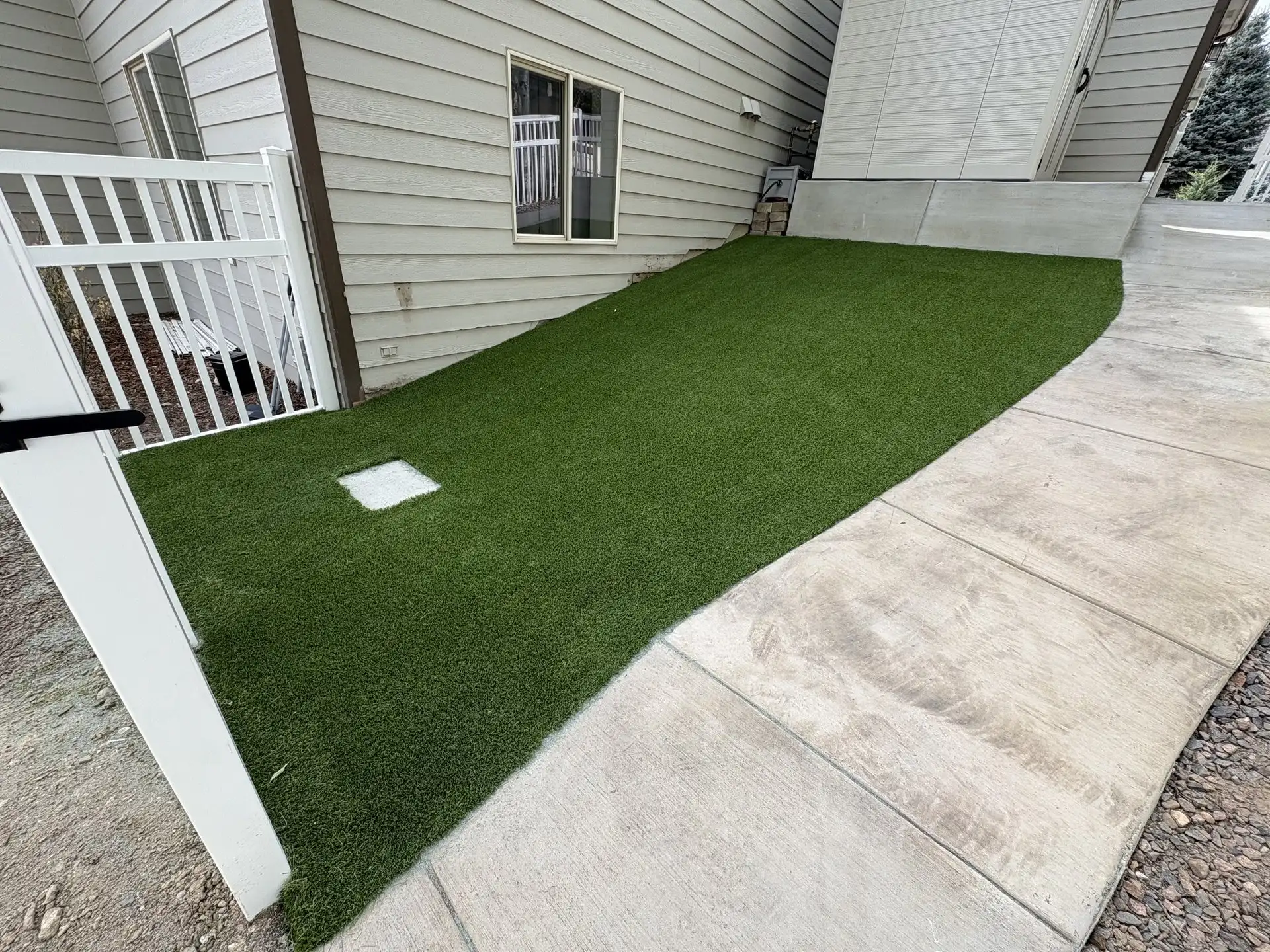
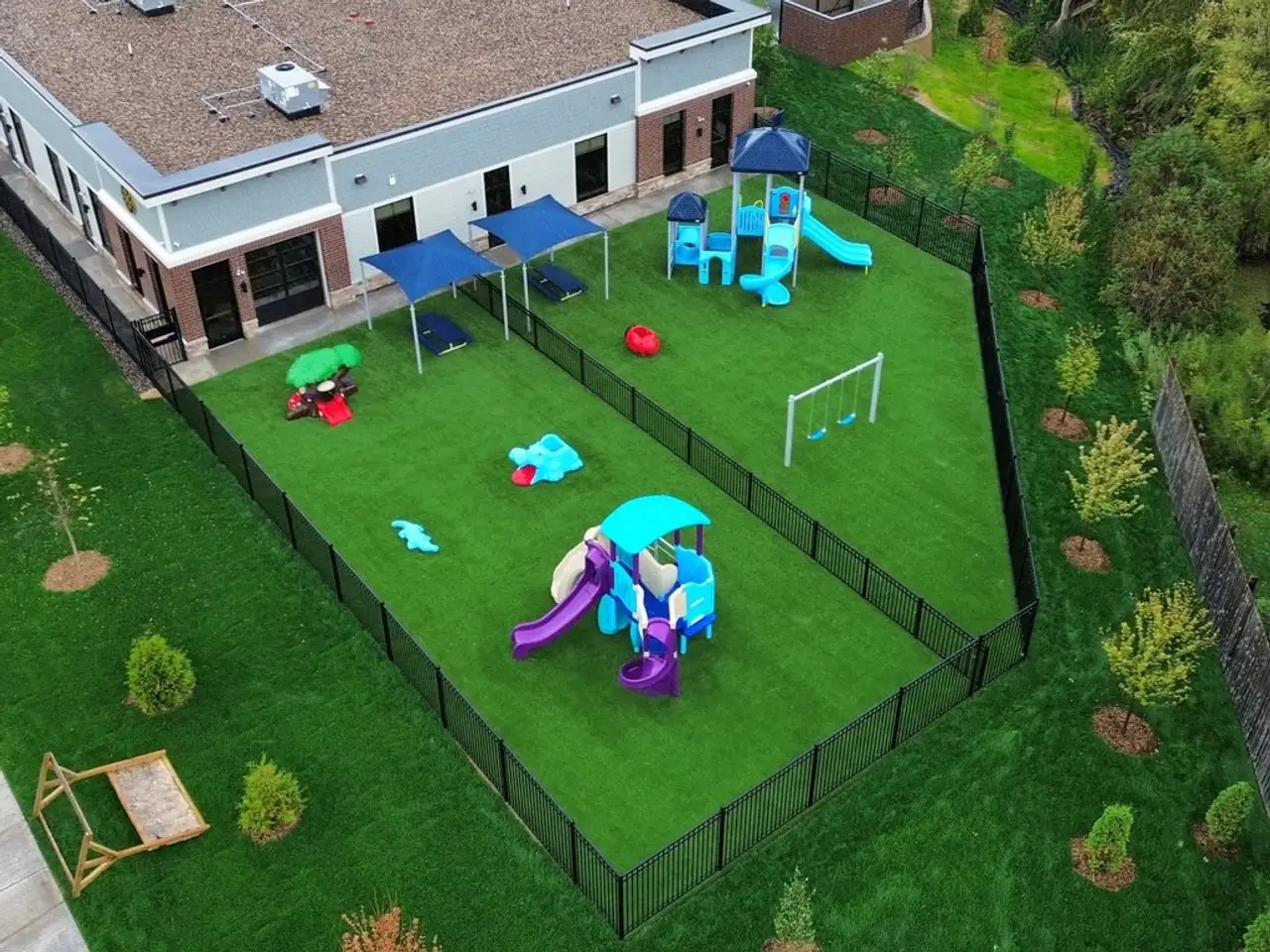
- A courtyard, dog run or play area with no mowing
- A layout that keeps turf out of required planting
- Stormwater permit questions asked before the base is planned
- Layout approved before installation
- American-made turf
- Free estimates, no pressure
The short answer
Does Florida’s synthetic turf law cover commercial property?
No. Florida's synthetic turf rule sets standards for single-family lots of 1 acre or less, and doesn't apply to commercial property. Your county or city code and any stormwater permit set the terms instead.
Before you install
What to know before you start.
The rules in short. We measure and check the ground at a free visit, then draw a layout that fits.
-
Stormwater permits
On a permitted site, turf can count as a change that needs a permit, and so can passing 9,000 square feet of impervious and semi-impervious surface. Ask the agency how it counts turf.
See the rule on stormwater permits
Adding turf can change your stormwater permit.
On a site that already has an environmental resource permit, a turf area can count as a change. Rule 62-330.020 requires a permit for any modification or alteration of a previously permitted project. On any site, it also requires one for a project that, alone or with work done after October 1, 2013, totals more than 9,000 square feet of impervious and semi-impervious surface, or more than 4,000 square feet of it used by vehicles. Its exceptions include listed exemptions and the 10/2 general permit for upland stormwater systems.
The statewide ERP Applicant’s Handbook, Volume I, adopted by DEP in Rule 62-330.010 and used by the St. Johns River Water Management District, defines impervious as surfaces that don’t let water through, or barely do. Semi-impervious means surfaces that partly restrict it, such as gravel, limerock and certain compacted soils. Neither definition mentions turf, so get the reviewing agency’s answer on how it counts the turf and its stone base before you set a budget.
If your site has a permit, the handbook weighs an increase of more than 10 percent or 0.5 acres of impervious and semi-impervious surface, whichever is less, in deciding whether a change is more than minor, unless the site was permitted with enough stormwater treatment and flood attenuation for it. Before the grass comes out, take the permit number, the approved drainage plan and the turf’s drainage data to the agency that issued the permit. Our impervious surface guide lists the questions to ask.
-
Landscape codes
Clay County, Jacksonville and Jacksonville Beach don't let synthetic turf count as required landscaping; Nassau, St. Johns and Fernandina Beach say the same of artificial plants or mulch. Get the reviewer's answer in writing.
See the rule on landscape codes
Keep turf out of the planting your code requires.
Three local codes name synthetic turf or lawns outright. In unincorporated Clay County, Sec. 18.5-51 sets landscaping standards for the paved ground areas of nonresidential buildings, and Sec. 18.5-53 says synthetic or artificial turf shall not be used in lieu of the plants that section requires. Jacksonville’s zoning code, in Sec. 656.1601, and Jacksonville Beach’s land development code, in Sec. 34-300, both define landscaping as grass, ground covers, shrubs, hedges, trees, rocks, pebbles, decorative mulch, walls or fences, but not paving, synthetic plant material or synthetic lawns. Where Jacksonville’s landscape rules define a term differently, Sec. 656.1203 applies the more restrictive definition.
Elsewhere, the rules name artificial plants or mulch rather than turf. Nassau County’s Sec. 37.05 says synthetic or artificial trees, shrubs, groundcovers or vines are not acceptable substitutes. St. Johns County’s LDC Section 6.06.02.A.5 says artificial plants can’t meet any landscaping requirement, and Fernandina Beach’s LDC 4.05.03 doesn’t allow artificial mulch in required planting areas. If your plan counts turf toward required landscaping in any of them, get the reviewer’s answer in writing first. In St. Johns County, commercial plan review sits with Development Review.
-
Existing sites
In Jacksonville, today's landscape rules reach an older site once two years of renovations total 60% of the improvements' assessed value. If turf needs a building or paving permit, get a landscape plan approved first.
See the rule on existing sites
Know what brings an older site under today’s code.
In Jacksonville, the landscape rules reach the rest of an existing commercial site only when renovations within two years total at least 60 percent of the assessed value of the lot improvements, or the building grows by 60 percent. That’s the test in Sec. 656.1209. If your turf job needs a building or paving permit, Sec. 656.1217 requires an approved landscape plan first, so ask the Planning and Development Department whether it needs either.
In Nassau County, a site built under earlier landscaping rules has to meet Sec. 37.05 only when you redevelop, reconfigure, expand or change its use. Even then it doesn’t if the site has 7,500 square feet of impervious area or less and adds 750 or less, or has more and adds under 2,000 square feet and under 10 percent of its existing impervious area. Ask the county how it counts turf against those figures.
-
Atlantic Beach
Atlantic Beach counts turf as permeable only if the system drains at least 100 inches an hour over a stone base at least 4 inches deep. The city inspects the base before turf covers it.
See the rule on atlantic beach
In Atlantic Beach, the city inspects the base first.
Atlantic Beach’s turf installation guidelines apply to all artificial turf installations in the city. To count as permeable for lot coverage, the system must drain at least 100 inches per hour, over a free-draining stone base at least 4 inches deep. The city reviews product specifications, permeability test results, installation details and a site plan, and inspects the base before turf covers it.
Turf can go in a privately owned retention or drainage area only if the basin keeps its designed storage and function, with drainage structures, overflow paths and maintenance access left clear. The city may ask for engineering documentation showing the drainage still works. Our Atlantic Beach page covers the city’s impervious cover limit.
-
Your estimate
Bring the parcel address, site plan, landscape plan and any stormwater permit number to the free visit. We measure the site and draw a layout you approve, then give a written price.
See the rule on your estimate
Bring the site’s permits to the free visit.
Bring the parcel address, the approved site plan and landscape plan, and any stormwater permit number. Mark the required planting, retention areas, swales and drainage structures. We measure the area, check the ground and draw a custom layout you approve before work starts, then give you a written price.
If a reviewer wants product specifications, drainage data or a base cross-section, agree who gathers and submits them before you set a start date. See the commercial turf service for surface options, and the northeast Florida page for everything else we install here.
What we install
Commercial turf for your space.
FAQ
Questions about commercial turf in Northeast Florida.
Does Florida’s rubber infill limit apply to our play area?
No. The limit to natural infill such as sand, rock or shell, with rubber or synthetic infill only within the footprint of playground equipment, is part of the home-lot rule. Choose the infill for how the space is used.
We’re still building in St. Johns County. Can we add turf to the approved plans?
Only with approval first. Section 13.16 of the county’s construction plans manual says changes to approved construction plans need Development Review approval before they go in the field. Minor changes may be approved without a submittal and documented on the as-built survey. A change that significantly alters the drainage plan or site plan goes through the same process as a new project, fees included.
Which office reviews a new stormwater permit here?
It depends on the project. The handbook sends applications to the agency the operating and delegation agreements make responsible for that type of work at that location. Its contact list places Clay, Duval, Nassau and St. Johns counties in DEP’s Northeast District, based in Jacksonville, and ERP staff can meet with you before you apply to say which agency takes your project.
Free estimate
See the plan before you decide.
Tell us about your project and we’ll call to arrange a free visit.
Or call 303-349-2368
Your free estimate includes
- A visit to measure your space
- A custom layout, drawn for your space
- Turf options, side by side
- A written price, with no pressure to sign
Five short steps. We’ll call to arrange your visit.