
St. Augustine, FL
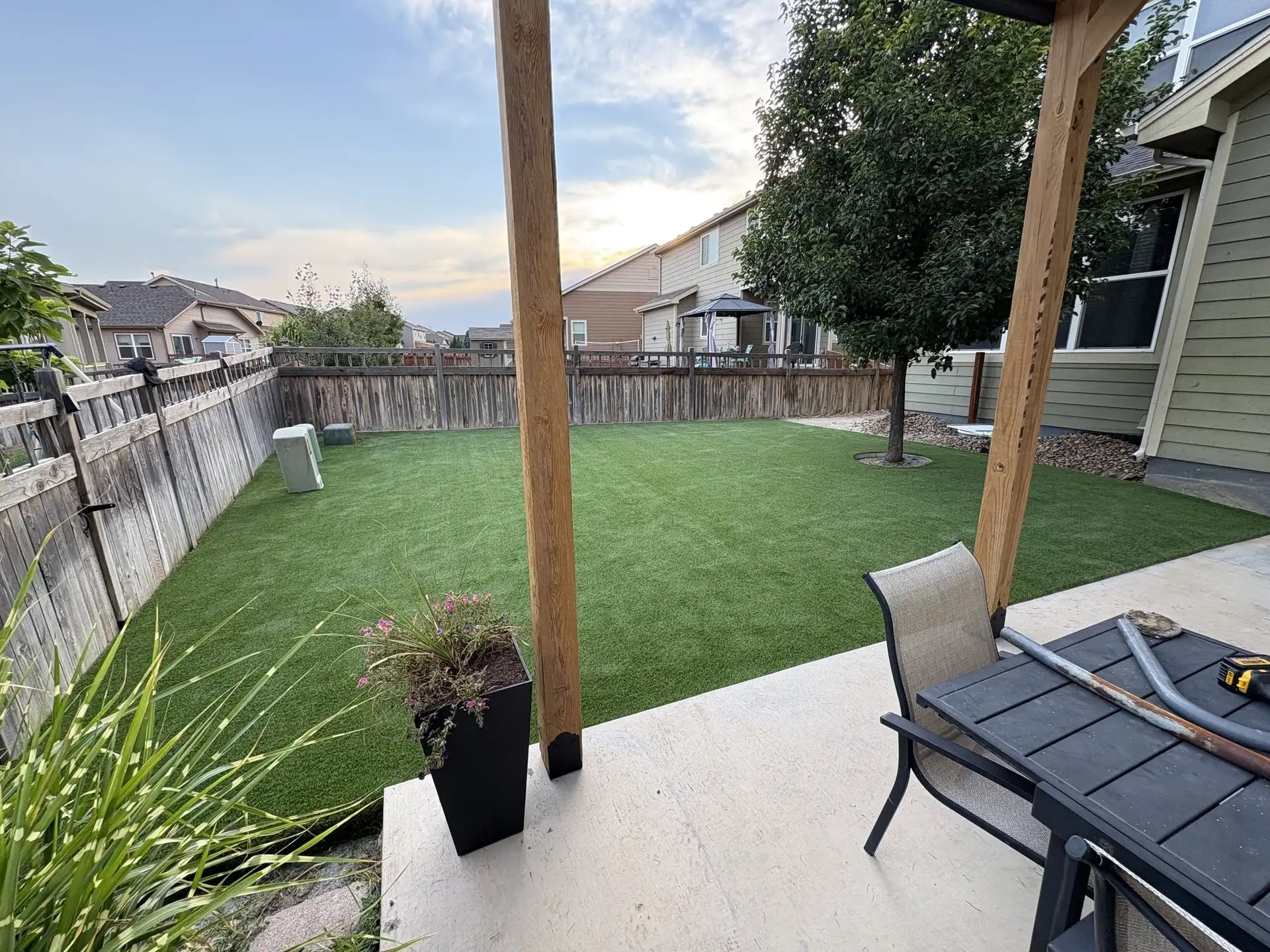
Artificial turf in St. Augustine, FL, built to fit your courtyard.
Downtown St. Augustine, the yard is a walled courtyard. Turn yours into a lawn, pet area or putting line, starting with a free visit and a written price.
- Finish the edges against paths and walls
- Keep historic features and mature trees
- Choose a useful surface for a small space
- Layout approved before installation
- American-made turf
- Free estimates, no pressure
The short answer
What should a St. Augustine courtyard turf project check first?
Whether it needs historic review. In the five Historic Preservation districts, most work needs a Certificate of Appropriateness from HARB. The City lists artificial turf as an acceptable yard surface, but that isn't approval for the change, so get the City's answer in writing.
Before you install in St. Augustine
What to know in St. Augustine.
The rules in short. We measure and check the ground at a free visit, then draw a layout that fits.
-
A walled courtyard
Plan how the turf meets your coquina, stucco and pavers before the outline is set, and keep drains and thresholds clear. Even a shaded courtyard still needs debris and any pet cleanup handled.
See the rule on a walled courtyard
The edges are part of the design.
Plan how turf meets coquina, stucco walls, pavers and planting before choosing the final outline. Keep thresholds, drains and service access clear. In a small space, a pet area, lawn or putting line should leave enough room for the other ways you use the courtyard.
A wall or tree may provide shade, but the surface still needs debris removal and any required pet cleaning. Discuss the care routine before deciding on the material.
-
Historic properties and larger yards
Keep historic features and protected trees in the plan. In North City or Nelmar Terrace, a larger yard can fit more putting lines or a separate pet area, so mark canopy and water routes first.
See the rule on historic properties and larger yards
Use the requirements for the actual site.
Within a Historic Preservation district, ask HARB or City preservation staff what review applies to the courtyard or landscape change. Keep existing historic features and required tree protections in the plan. A permitted yard material is not blanket approval for every alteration.
In North City or Nelmar Terrace, a larger yard can offer more putting lines or a separate pet area. Mark the canopy, water routes and usable access before expanding the footprint. For a property affected by tidal flooding, keep that problem separate from the surface installation scope.
-
Courtyards
A historic district lot can be as small as 1,750 square feet, leaving a walled courtyard that rarely gets the sun grass needs. The city's code already lists artificial turf as an acceptable yard surface.
See the rule on courtyards
Downtown, the yard is a courtyard.
In the city's Historic Preservation districts, a lot can be as small as 1,750 square feet, with up to 70% of it built on and setbacks of 3 feet at the sides and rear (St. Augustine zoning code). What's left is a walled courtyard behind coquina or stucco, not a lawn, and between the walls and the trees it rarely gets the sun grass needs.
The city's code already treats turf as a proper yard. Its property maintenance rules list artificial turf and sod among acceptable yard surfaces, set against weeds, gravel and broken concrete, and another section leaves lawns and landscape areas out of impervious area (City of St. Augustine Code).
Walls and paths frame a courtyard on every side, so every edge shows. The turf is laid, seamed and edged to the coquina and the pavers, then finished with infill and the courtyard cleaned up.
-
Historic districts
Most work in the five historic districts needs a Certificate of Appropriateness from HARB, so ask before the courtyard layout is final. Palencia carries a St. Augustine address but answers to its own review board.
See the rule on historic districts
In the historic districts, ask about a certificate first.
Most work in the city's five Historic Preservation districts needs a Certificate of Appropriateness from HARB, the city's historic architecture board, judged against its Architectural Guidelines for Historic Preservation. City tree protection applies too. Before the courtyard layout is final, ask the city whether your work needs a certificate, and get the answer in writing.
State law stops a city banning turf that meets Florida's standard on a single-family lot of an acre or less (Fla. Stat. 125.572). What that standard asks of the turf itself is set out in our guide to Florida's turf rules.
Homeowners' associations are rare in the old city; the gate downtown is HARB, not an HOA. Where one does exist, it can restrict only what's visible from the street, next door, a common area or a community golf course (Fla. Stat. 720.3045).
Palencia carries a St. Augustine mailing address, but the community itself sits in unincorporated St. Johns County, so the city's HARB review and code sections above don't reach it; what governs there is the Palencia Architectural Review Board. A 15 December 2016 notice from the Palencia Property Owners Association quotes Section 8.1 of the community's Declaration: the ARB "exists to review all designs and plans of all new homes and improvements to existing homes and landscaping," and every owner is asked to contact the ARB before any exterior change (Palencia Property Owners Association). The same notice cites Section 5.16: a lawn damaged by chinch bugs, fungus or another infestation "will need to be replaced with sod grass" in the affected areas. The notice does not mention artificial turf, so a lawn or putting-green layout there should go to the ARB in writing before it's final, and Fla. Stat. 720.3045 still limits what the association can restrict to what's visible from the street, a neighboring lot, a common area or a golf course.
-
Salt water and watering
Shade, salt and the odd saltwater flood are a mix St. Augustine grass rarely survives. Since May 2026, the Phase III order limits watering to one day, Saturday or Sunday by address.
See the rule on salt water and watering
King tides, a high water table and a one-day schedule.
St. Augustine sits on fine sand over the Anastasia Formation, the coquina the Spanish quarried to build the Castillo de San Marcos (Wikipedia), and in wet seasons the water table can sit within a foot of the surface. Some of the trouble comes from the sea: on sunny-day and king tide floods, 12 to 16 a year, salt water backs up through the storm drains into the streets (City of St. Augustine). Shade, salt and the odd saltwater flood are a mix St. Augustine grass rarely survives.
The city runs its own water utility. Normally it allows watering twice a week in daylight saving time, Wednesday and Saturday for odd addresses and Thursday and Sunday for even, once a week in winter, and never from 10 a.m. to 4 p.m. (City of St. Augustine). Since 11 May 2026 the district's Phase III order has cut that to one day, Saturday or Sunday by address, with nothing from 8 a.m. to 6 p.m. (St. Johns County).
What we install in St. Augustine
Choose your turf project.
Compare courtyard turf, a lawn, pet area or putting green around the features you want to retain.
-
Artificial lawns
Spend less time mowing, with an artificial lawn planned around your yard and its use.
See artificial lawns -
Putting greens
Practice your putting right outside your back door.
See putting greens -
Pet turf
A dog run or pet lawn planned around drainage, secure edges and regular cleaning.
See pet turf
FAQ
Turf questions in St. Augustine.
Who installs artificial turf in St. Augustine, FL?
We install artificial turf, pet turf and backyard putting greens in St. Augustine, FL. Downtown the outdoor space is usually a walled courtyard in a historic district, where HARB's approval may come first, and the city's code lists artificial turf by name among acceptable yard surfaces. Call 303-349-2368 for a free estimate.
Does artificial turf count as impervious in St. Augustine?
The city leaves lawns and landscape areas out of impervious area, but its wording doesn't say whether turf counts as a lawn (City of St. Augustine Code). If your lot is close to a coverage limit, ask the city before you plan. Either way, the base we build under the turf drains.
How big are yards outside the historic districts?
It depends on the zoning. RS-1 lots are a quarter acre; RS-2 lots start at 5,450 square feet and 50 feet wide, with up to 30% of the lot built on (St. Augustine zoning code). An RS-2 back yard takes a lawn and a dog run; a quarter acre has room for a green as well.
Is turf safe for kids and pets in a small courtyard?
Yes. We install premium American-made turf that's non-toxic and lead-free. Florida's standard for home lawns allows natural infill such as clean silica sand and keeps rubber to the ground under play equipment (DEP Rule 62-308.100).
Does the city give a rebate for switching to turf?
No. Neither the city nor the St. Johns River Water Management District offers a rebate for artificial turf. What you gain is a courtyard that never waits for its watering day.
Is a St. Augustine mailing address the same as the city, for approvals?
Not always. Palencia has a St. Augustine mailing address but is unincorporated St. Johns County, so HARB and the city code above don't apply there; its own Architectural Review Board reviews landscaping and improvements first. Confirm which body has jurisdiction over your address before the layout is final.
Free estimate
Your free estimate in St. Augustine.
Tell us about your project and we’ll call to arrange a free visit.
Or call 303-349-2368
Your free estimate includes
- A visit to measure your space
- A custom layout, drawn for your space
- Turf options, side by side
- A written price, with no pressure to sign
Five short steps. We’ll call to arrange your visit.