
Hibernia, FL
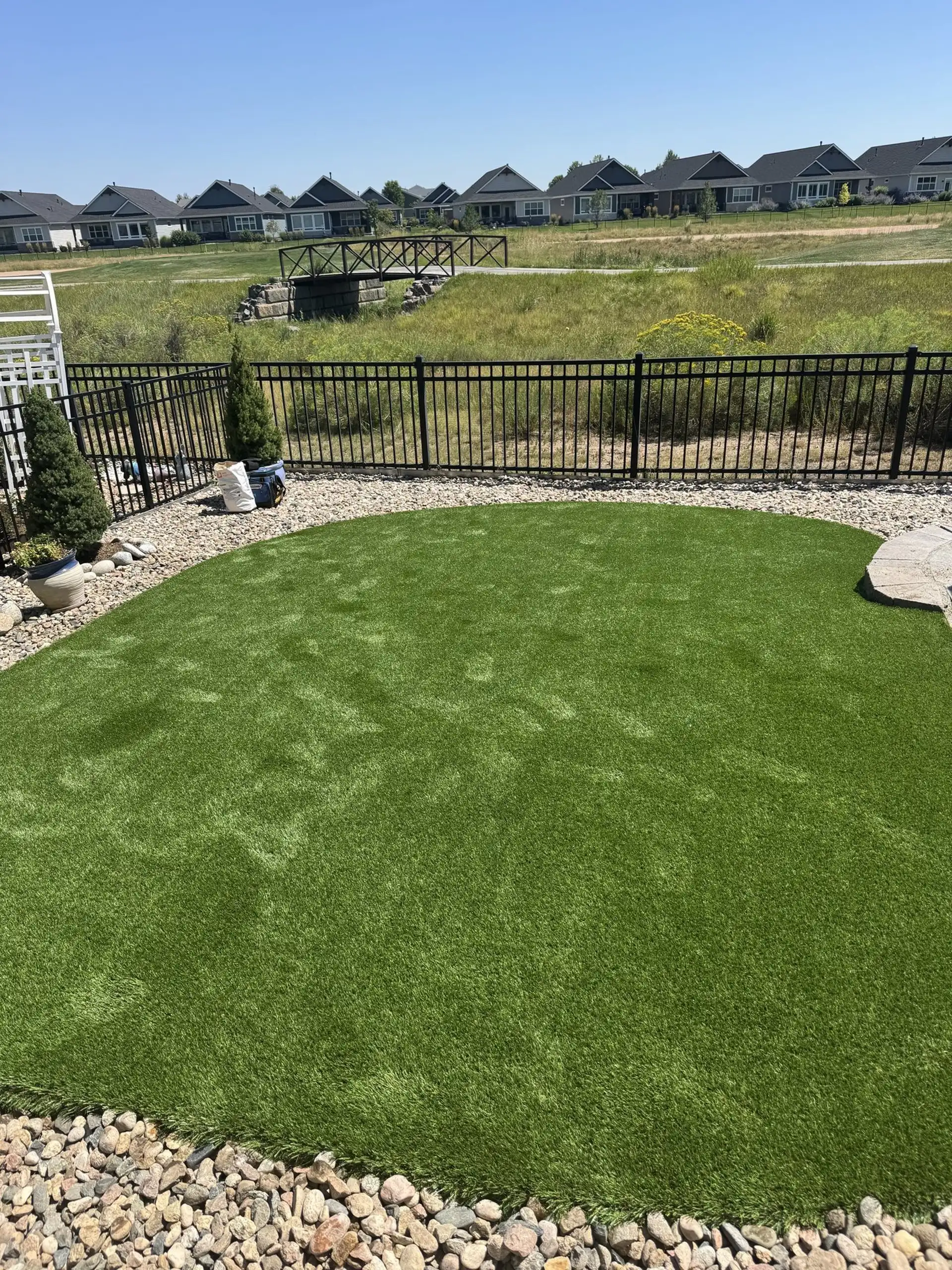
Artificial turf in Hibernia, FL, where the sand suits a green with real contour.
Tiers, a fringe collar and a chipping approach can all fit a Hibernia backyard green. A free visit checks your ground and trees, then you get a written price.
- Use available room for putting and chipping
- Keep mature trees and property access
- Consider river-side conditions before the boundary
- Layout approved before installation
- American-made turf
- Free estimates, no pressure
The short answer
What should a Hibernia river property consider for a putting green?
Your flood zone first. On the river side, grading for a green in a Special Flood Hazard Area needs a county permit before work begins; in Zone X it doesn't. Then plan for the slope, the tree canopy and drainage.
Before you install in Hibernia
What to know in Hibernia.
The rules in short. We measure and check the ground at a free visit, then draw a layout that fits.
-
A green with a purpose
A larger yard can fit more than one putting approach and a chipping spot without covering the whole space. Choose your route to the green, then set contours for practice, not by the existing slope.
See the rule on a green with a purpose
Let the available room serve the shots you want.
A larger yard can allow several putting approaches and a chipping position without converting every open space. Decide how you will reach the green from the house and keep ordinary property access around it. Contours should be chosen for practice rather than assumed from the existing slope.
-
River frontage and old trees
Mark the tree canopy and get any required arborist advice before work begins beneath it. Being unincorporated doesn't mean no review is needed, so confirm county requirements before the layout is final.
See the rule on river frontage and old trees
Keep the setting in the plan.
Mark the tree canopy and obtain any required arborist advice before proposing work beneath it. Near the St. Johns, bring shoreline and drainage information and show any low areas or existing retaining structures.
Hibernia is in unincorporated Clay County. Confirm applicable county and property requirements; an absence of a town government does not establish that no review is needed. Ask for any unresolved drainage or ground work to be separate from the turf installation price.
-
The ground
Deep, well-drained sand takes a stable base that can carry tiers and real undulation. On bluff lots dropping toward the St. Johns, plan for retaining and edge detail.
See the rule on the ground
Blanton sand: deep, clean and well drained.
USDA mapping at the heart of Hibernia returns Blanton fine sand on 0 to 5 percent slopes, rated well drained and in hydrologic group A, with no flooding or ponding and the water table no closer than about 165 centimetres, some 5.4 feet (USDA). The deep sand sits over a loamy subsoil more than four feet down.
That's ground a golf architect would ask for. Digging is easy, water genuinely percolates, and a compacted, open-graded base stays stable, which is what lets a green carry real undulation, tiered shelves and a fringe collar instead of lying flat on the lawn.
Hibernia has no course of its own, but The Golf Club at Fleming Island on Town Center Boulevard, with its driving range, is about 1.2 miles from the St. Margaret's site, and Eagle Harbor Golf Club is about 3.5 miles north. So a backyard putting green here can be the full thing: tiers, a fringe collar, a chipping approach from the lawn and cups set where the break gets interesting.
The river bluff is the exception. Parcels dropping toward the St. Johns have real grade, so retaining and edge detail matter there, and the old plantation frontage carries live oak, magnolia and cypress canopy dense enough that grass won't hold under it. Just south, Black Creek and Peters Creek meet at Camp Chowenwaw Park.
-
The flood map
Find your flood zone before the layout is fixed. Grading and digging for a green counts as development, so a Special Flood Hazard Area needs a permit first; Zone X does not.
See the rule on the flood map
On the river side, your flood zone decides whether a permit comes first.
Find the zone before the layout is fixed. FEMA reads the St. Johns at 4.1 feet NAVD 88 for the 1-percent-annual-chance flood, both at Orange Park to the north and at the Shands Bridge to the south, the two points FEMA reports either side of Hibernia, and it treats this reach as a large lake with tidal effects rather than a flowing river (Clay County Flood Insurance Study, effective 17 March 2014). That elevation is the base flood. Where your ground sits against it is what puts a parcel in or out of the mapped hazard area, and the county's map is what settles it.
It matters because the dirt work counts. Clay County Ordinance 87-45 requires all development inside a Special Flood Hazard Area to get a permit before work begins, and the county's definition of development takes in filling, grading, paving, excavations and any other land disturbing operations (Clay County). Stripping sod and cutting in a base for a green is all of that. In Zone X, flood permits are not required for development at all, so the zone, not the size of the green, decides whether paperwork comes first.
The river spares you the hard version. No floodway was computed for the St. Johns, because at two miles wide it resembles a lake more than a river, so a lot fronting it avoids the engineer-sealed No-Rise study that work in a floodway needs. Send your address to the county's floodplain team at floodteam@claycountygov.com and ask for your zone and what a landscaping-only job needs. Ask now rather than later: FEMA is redrawing the 2014 maps and the replacements are expected to take effect in spring 2027 (Clay County).
-
Approvals
Nothing in the county code bans turf, and most Hibernia Road and river-frontage parcels carry no covenants. Inside Eagle Harbor, Fleming Island Plantation or Pace Island, read your covenants before design work.
See the rule on approvals
On Hibernia Road, there's often nobody to ask.
Hibernia is unincorporated, with no town government or review board of its own, and nothing in the Clay County code prohibits artificial turf (Clay County code). Only two overlay areas bring homes under the county's landscaping requirements, and Hibernia sits outside both.
The gatekeepers here are private covenants. The master-planned Fleming Island communities, Eagle Harbor, Fleming Island Plantation and Pace Island, carry HOAs, while the historic Hibernia Road and river-frontage parcels are largely unplatted and covenant-free. On Hibernia Road or the river side of US 17 you very likely have no covenant to satisfy; inside Eagle Harbor or the Plantation, read yours before any design work.
What we install in Hibernia
Choose your turf project.
Compare a practice green, lawn or pet area around the trees, grade and access your property provides.
-
Putting greens
Practice your putting right outside your back door.
See putting greens -
Artificial lawns
Spend less time mowing, with an artificial lawn planned around your yard and its use.
See artificial lawns -
Pet turf
A dog run or pet lawn planned around drainage, secure edges and regular cleaning.
See pet turf
FAQ
Turf questions in Hibernia.
Who installs artificial turf in Hibernia, FL?
We install putting greens, artificial lawns and pet turf for Hibernia's river lots, on the St. Johns' west bank below Fleming Island. The ground here is Blanton fine sand, rated well drained, its water table some 65 inches down, which suits a green with real contour. Clay County's code has no turf prohibition, and many river parcels carry no covenants. Call 303-349-2368 for a free estimate.
Where exactly is Hibernia?
Off US 17 on the St. Johns' western shore, at the southern end of what is now Fleming Island. It began as the 1790 Hibernia Plantation, George Fleming's 1,000-acre Spanish land grant, named for the Latin word for Ireland, and it had its own post office from 1849 to 1931 (Hibernia, Florida).
Can I water more often from my own well or the river?
No. Clay County's Sec. 18.5-77 puts wells, pumps, ground water and surface water under the same irrigation limits as utility water, so the river gets you no extra days (Clay County code). Drip, micro-spray and bubbler systems, and a hand-held hose with an automatic shut-off nozzle, are exempt.
Does St. Margaret's historic listing limit what I can do with my yard?
No. St. Margaret's Episcopal Church and Cemetery went on the National Register in 1973, the oldest listing in Clay County, but the listing is honorary and puts no design controls on neighbouring private property (National Register listings, Clay County).
Can turf go over my septic drainfield?
Plan around it. The state holds unobstructed ground of at least 1.5 times the drainfield's absorption area, counting the drainfield inside that figure, so a 200 square foot field ties up 300 square feet all told, contiguous to the field and on top of every setback (Rule 62-6.005). Cover any part of it with impervious material once the system has final approval and the state moves to revoke the septic permit (Rule 62-6.003). Neither rule names synthetic turf, so we keep the turf footprint clear of both and you take anything beyond that to the Florida Department of Health in Clay County, whose eBridge records hold final septic inspections from 1993 to the present, searchable by street address or parcel ID. Ask for yours before we draw the layout.
Free estimate
Your free estimate in Hibernia.
Tell us about your project and we’ll call to arrange a free visit.
Or call 303-349-2368
Your free estimate includes
- A visit to measure your space
- A custom layout, drawn for your space
- Turf options, side by side
- A written price, with no pressure to sign
Five short steps. We’ll call to arrange your visit.