Costs and planning
How should an HOA carry artificial turf in its reserve study?
The short answer
How should an HOA carry artificial turf in its reserve study?
Artificial turf in a common area is a capital item like any other, so it gets its own line: an estimated remaining useful life and a replacement cost. In Florida, that's how the statute requires every reserve component to be computed. Colorado doesn't set a formula, but every association must adopt a written policy saying when a study happens and what it covers. Ask your manager which policy your turf falls under.
The short version
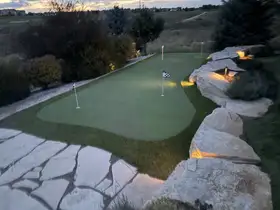
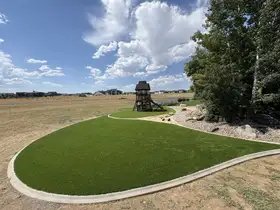
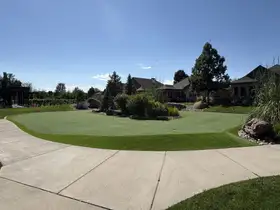
Turf in a common area — a dog run, an entry bed, an amenity lawn, a shared putting green — is a capital asset the association owns and maintains, so it belongs in the reserve conversation the same way a roof or a pool deck does. Florida spells out the math. Colorado spells out the paperwork. Neither statute mentions artificial turf by name, so nothing here is turf-specific law; it’s how each state’s general reserve rule applies once turf is one of the items an association owns.
This is a summary, not legal advice. For how your specific reserve study or budget should treat your turf, ask your community association manager or reserve preparer.
Florida: the formula runs item by item
Florida doesn’t require every HOA to reserve for anything. The requirement turns on whether the association has reserve accounts, or reserves are proposed in the budget, in the first place (Fla. Stat. 720.303).
Once a reserve account exists, the statute is specific about how the number in it gets built. Subsection (6)(e) requires the amount to be “computed by means of a formula that is based upon estimated remaining useful life and estimated replacement cost or deferred maintenance expense of each reserve item.” Two numbers, per item: how many years the thing has left, and what it costs to replace or fix.
That’s the operative phrase for turf: each reserve item. The statute doesn’t ask an association to reserve for “landscaping” as a lump sum. It asks for a component list, and each component carries its own remaining life and its own cost. A common-area turf installation reserved on its own would sit on that list the way a clubhouse roof or a pool pump does — with a life estimate and a cost estimate specific to it, not folded into a general landscaping figure that mixes turf with irrigation heads and shrub beds on different replacement timelines.
Whether your association’s reserve preparer treats turf as its own line, or groups it under a broader landscape or hardscape category, is a call your board and preparer make. The statute sets the method; it doesn’t hand out a component list.
Waiving the reserve, and spending it on something else
Two more subsections matter once reserves exist.
Waiving or reducing reserves takes a membership vote, not a board vote. Subsection (6)(f) lets the membership, at a meeting with a quorum present, vote to have no reserves or less than the formula would produce. That vote only covers one budget year — it has to be taken again for the next one, which means a board can’t waive turf reserves once and call it settled going forward.
Spending reserve money on something other than what it was reserved for also takes a membership vote. Subsection (6)(h) keeps reserve funds, and any interest they earn, restricted to their authorized purpose unless the membership approves the other use in advance, again by majority vote at a quorum meeting. If your association reserved for turf replacement and then wants to use that account for a different capital project, that’s a vote, not a budget-line adjustment.
Colorado: the requirement is a written policy, not a formula
Colorado’s Common Interest Ownership Act doesn’t give associations a computation formula the way Florida does. What it requires is a policy.
Under C.R.S. 38-33.3-209.5(1)(b)(IX), every common interest community association must adopt written policies, procedures or rules addressing reserves, and that policy has to state three things:
- When the association has a reserve study prepared for the portions of the community it maintains, repairs, replaces or improves.
- Whether there’s a funding plan for the work the study recommends, and if so, the projected sources of funding.
- Whether the study is based on a physical analysis and a financial analysis, or something less.
The statute sets no fixed interval for how often a study happens — that’s for your association’s own policy to say. And it explicitly allows the study to be done in-house: “an internally conducted reserve study shall be sufficient.” An outside engineering firm isn’t required by this section.
For turf in a Colorado common area — say, a dog run inside a covered community, or a shared putting green — the practical question isn’t a special turf rule. It’s whether your association’s existing reserve policy names turf-bearing common elements among what it maintains, and whether your board’s study (internal or not) has actually looked at their condition and remaining life the way the policy says it will.
What this means for documenting turf’s remaining life
Both statutes point to the same input a board needs regardless of state: a defensible estimate of how much service life a turf installation has left, and what replacing it costs.
That estimate has to come from somewhere real — the installed product’s specifications, the site’s use (a dog run wears differently than a low-traffic entry bed), and the installation date. We can provide the manufacturer’s stated service life and the layout and materials used on a job we install, which gives your board or reserve preparer a documented starting point rather than a guess. What we can’t do is tell your reserve study how to classify or fund the item; that’s your association’s decision under its own documents and the statute that applies to it.
For the separate question of whether your HOA can restrict turf in the first place, see our guide to Colorado HOA turf rules and Florida-friendly landscaping and HOAs — reserves and approval are two different questions, governed by different parts of each state’s law.
A short checklist for the board
- Confirm whether a reserve account already exists, or is proposed, for the property with turf on it. In Florida, that’s what triggers the formula requirement.
- Ask whether turf is its own reserve line or folded into a broader landscape category, and who made that call.
- Get the remaining-useful-life and replacement-cost numbers in writing, tied to the specific installation, not a generic figure.
- In Florida, if reserves were waived or reduced, confirm it was a membership vote at a quorum meeting, and that it’s on the agenda again next budget year.
- In Colorado, ask to see the association’s written reserve policy and check it addresses timing, funding plan and whether the study covers physical and financial analysis.
- Before any capital work is approved, confirm the money for it is coming from the account it was reserved for, or that the membership voted to redirect it.
Common questions
Does Florida require our HOA to have a reserve study at all?
Only if the association has reserve accounts, or reserves are proposed in the budget. Once a reserve account exists, Fla. Stat. 720.303(6)(e) requires the amount in it to be computed by a formula based on each item's estimated remaining useful life and estimated replacement cost or deferred maintenance expense. That formula is what turns into a study.
Can our Florida board just vote to skip reserving for the turf this year?
The membership can, not the board alone. Fla. Stat. 720.303(6)(f) lets the membership vote, at a meeting with a quorum, to have no reserves or less than the formula would require. That vote covers one budget year only and has to be taken again for the next one.
Once money sits in the turf reserve, can the board spend it on something else?
Not without a vote. Fla. Stat. 720.303(6)(h) keeps reserve funds, and the interest they earn, restricted to the purpose they were reserved for unless the membership approves the other use in advance by majority vote at a quorum meeting.
Does Colorado require a reserve study on a set schedule?
Not on a set schedule. C.R.S. 38-33.3-209.5(1)(b)(IX) requires the association's written policy to state when a study is done, whether a funding plan exists, and whether the study uses physical and financial analysis. The statute lets that study be conducted internally.
Who decides whether our turf is its own reserve component or gets folded into "landscaping"?
Your board and its reserve preparer, guided by your governing documents and, in Florida, the statutory formula. We can hand over the manufacturer's expected service life and the installed layout so whoever prepares the study has real numbers to work from, but the classification call belongs to your association.